

[ Get a Demo ]
Ready To See AVA in Action?
See exactly how our AI Voice Agent can be customized for your business. Book a free, no-obligation walkthrough today.
Pick your industry and we'll send you the playbook: real use cases in production and the ROI numbers (no-shows recovered, after-hours leads captured, hours saved).

Drop your details and AVA will call your phone within a minute, with a script tailored to your industry. You'll hear exactly how she'd handle one of your customers.
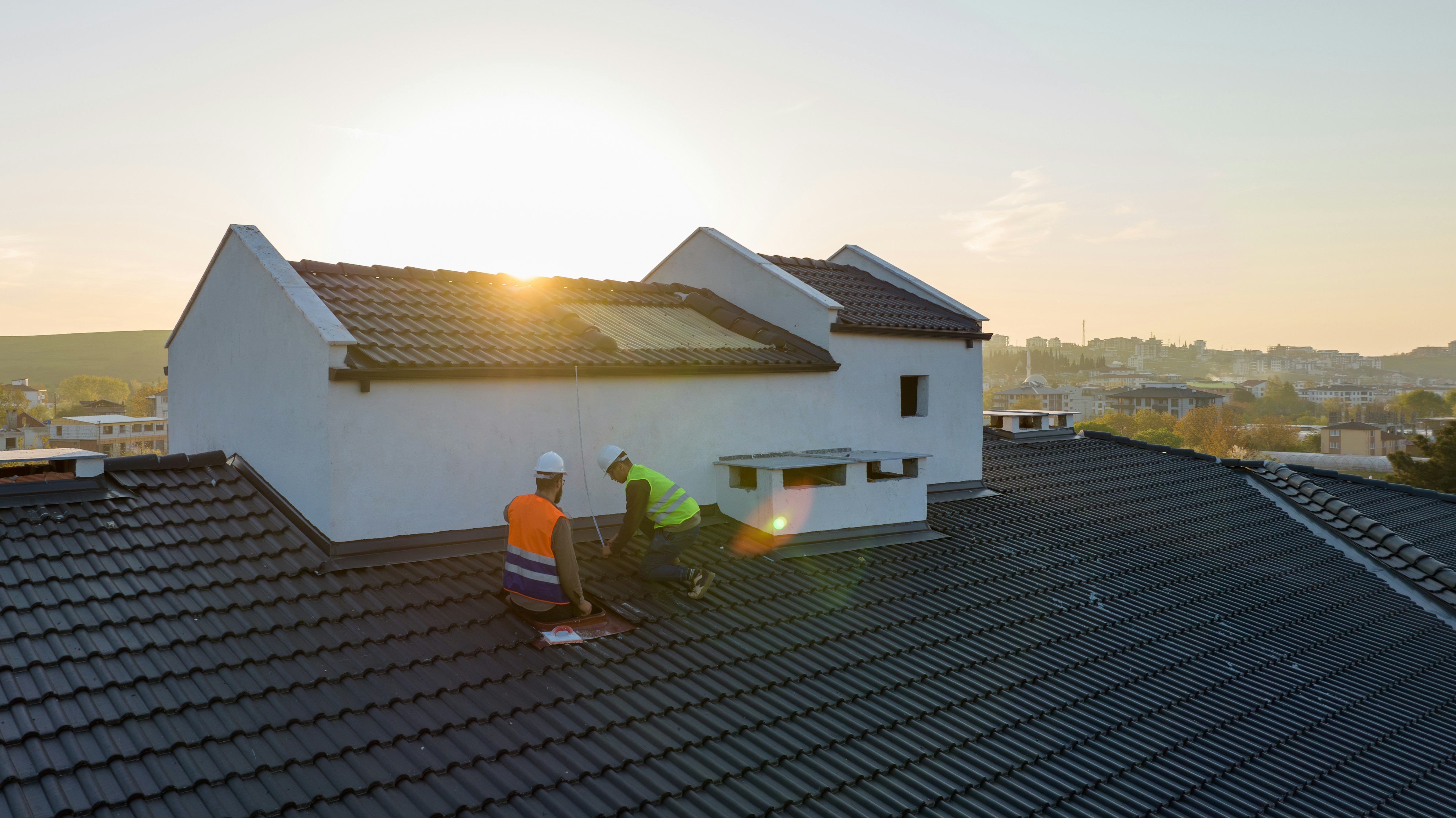
A hailstorm rolls through a neighborhood on a Tuesday afternoon, and by Wednesday morning, every roofing company within twenty miles is fielding the same flood of calls from homeowners who all want the same thing: someone out to inspect the damage before their insurance window closes. The roofers who book the most jobs that week usually aren't the ones with the best reviews. They're the ones whose phone got answered.
That's the reality of roofing lead generation that most marketing advice skips over entirely. You can spend heavily on storm-chasing ads, canvassing, and referral programs, but if the phone rings during a job walk-through and nobody picks up, all of that spend just funnels a lead straight to a competitor instead.
Roofing doesn't generate steady, predictable call volume the way some trades do. It moves in sharp bursts tied to weather events, and those bursts are exactly when a crew is least available to answer the phone, since everyone who could take a call is either on a roof, driving between estimates, or in the middle of a homeowner walkthrough.
This creates a specific bottleneck: a single storm can generate more inbound calls in 48 hours than a normal month combined, while the people who'd normally answer those calls are busier than at any other point in the year. The mismatch isn't a staffing failure. It's the nature of storm-driven demand colliding with a small crew's physical limits.
A homeowner dealing with storm damage isn't calling one roofer and waiting patiently. Insurance claims often come with time pressure, and multiple contractors are getting called within the same hour as homeowners work through search results or neighbor recommendations. Whoever answers first, confirms availability, and gets an inspection on the calendar typically wins the job, independent of how strong the company's actual work or reputation is.
Storm damage jobs are also typically large-ticket, often insurance-funded, and represent some of the highest-value work a roofing company books all year. A full roof replacement can run into five figures once materials, labor, and insurance coordination are factored in, which makes each missed call during a storm surge considerably more expensive than a missed call during a slower, routine-repair stretch of the year.
Answers every call during a surge, not just the calls that happen to land when someone's back in the office between site visits.
Asks the questions that separate a storm lead from a routine one: type of damage, whether an insurance claim has already been filed, roof age, and general urgency, so the business knows what it's dealing with before a crew member ever calls back.
Books inspections against real crew availability, factoring in who's already scheduled and roughly when the next opening actually is, rather than offering a slot nobody can honor.
Handles routine calls separately from storm-driven ones, since a homeowner asking about a small repair or a roof replacement quote shouldn't get lost in the same queue as an urgent post-storm inspection request.
Provides basic information immediately, like service area coverage or general timeline expectations, so a caller isn't left in silence while deciding whether to try the next name on their list.
The single hardest thing for a traditional office setup to handle is simultaneous demand. One person answering phones can only talk to one caller at a time, and during a storm surge, every additional caller beyond that one conversation is sent straight to hold, voicemail, or a busy signal, each of which pushes them toward a competitor who happened to have more phone capacity that day. Systems designed to handle multiple calls during overflow periods remove that ceiling, since call capacity stops being limited by how many people happen to be in the office at that exact moment.
Roofing companies often invest heavily in storm-chasing marketing, PPC campaigns, canvassing crews, and door hangers, all designed to generate exactly the kind of call volume a missed-call problem quietly wastes. If a meaningful share of inbound calls during peak storm season go unanswered, that marketing spend is producing leads for the business never actually captures. Closing the phone-coverage gap tends to have an outsized effect on return from existing lead sources, since it doesn't require spending more to generate leads. It just stops losing the ones already being generated.
Not every roofing call should run through automation from start to finish. A homeowner disputing an insurance adjuster's assessment, a complex multi-structure commercial project, or a customer with a specific concern about a previous job all benefit from a person who can navigate nuance a structured intake flow can't fully cover. A well-configured system is built to recognize when a call has moved past routine intake and route it to a live team member with the relevant context already gathered, rather than trying to resolve everything through automation alone.
Storm-related roofing jobs frequently run into the thousands of dollars, especially full roof replacements funded through insurance claims. Losing even a small number of these calls during a single storm event can represent more lost revenue than an entire slow month of routine work. Running the actual ROI of an AI voice agent against a company's own storm-season call volume, rather than a flat annual estimate, tends to make the real financial impact much clearer, since the value concentrates heavily into a handful of high-volume weeks rather than spreading evenly across the year.
Hiring enough office staff to comfortably handle a major storm surge means paying for a lot of idle capacity the rest of the year, which rarely makes sense for a seasonal trade. Automated call handling solves this differently by scaling to match demand without requiring the business to carry that staffing cost year-round. For roofing contractors evaluating this as a broader fix rather than a single-storm patch, a small business AI voice agent configured around seasonal spikes tends to close this gap without forcing a tradeoff between slow-season efficiency and storm-season readiness.
Roofing leads don't arrive at a steady pace, and a phone setup built for steady demand will always struggle the moment a storm changes the math. The contractors capturing the most storm-driven business usually aren't doing anything different in terms of craftsmanship or pricing. They're simply the ones whose phone gets answered when every other roofer's line is either busy or silent.
It's configured with intake questions specific to storm damage, such as whether a claim has been filed and how recent the damage is, allowing urgent leads to be flagged and routed for faster follow-up than a standard repair inquiry.
Yes, when integrated with a company's scheduling system, it checks actual crew and inspector availability rather than offering time slots that don't reflect who's genuinely free.
It helps year-round by handling routine scheduling and quote requests consistently, but the clearest financial impact shows up during storm-driven surges when call volume spikes well beyond what office staff can manage alone.
Most callers in that moment care more about getting a fast, clear next step than about who answers. The concern tends to arise only if a system attempts to handle something it isn't suited for, like a complex insurance dispute.
Smaller companies often see a sharper relative benefit, since they typically have less spare office capacity to absorb a sudden call surge compared to larger regional operations.
See exactly how our AI Voice Agent can be customized for your business. Book a free, no-obligation walkthrough today.