.png)

.webp)
[ Get a Demo ]
Ready To See AVA in Action?
See exactly how our AI Voice Agent can be customized for your business. Book a free, no-obligation walkthrough today.
Pick your industry and we'll send you the playbook: real use cases in production and the ROI numbers (no-shows recovered, after-hours leads captured, hours saved).

Drop your details and AVA will call your phone within a minute, with a script tailored to your industry. You'll hear exactly how she'd handle one of your customers.
She's been putting it off for two weeks. The headache that won't go away, the mole her husband keeps mentioning, the follow-up she was supposed to book after her last visit. Today she finally picks up the phone and dials your clinic.
It rings twice. She gets placed on hold.
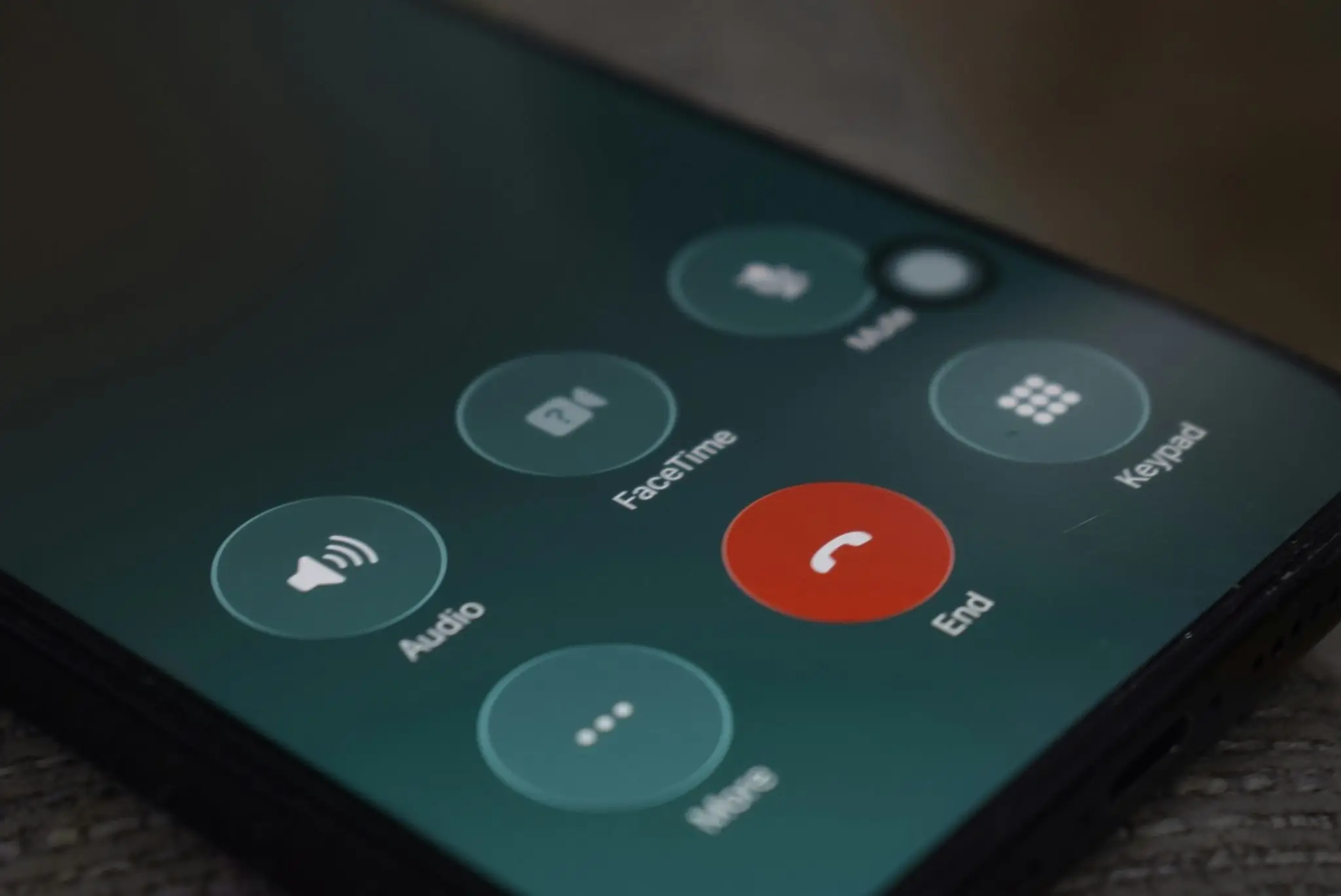
There's music. Or maybe a recorded message explaining your hours. She shifts in her seat, glances at the clock, and switches the phone to her other ear. Thirty seconds pass. A minute. She has a meeting in ten minutes and a kid to pick up at three.
In two minutes, she hangs up.
She doesn't leave a voicemail. She doesn't call back later. She opens Google, types in "family doctor near me accepting new patients," and books an appointment with a clinic that answered on the second ring because they had an AI handling overflow while their staff was busy.
That's not a hypothetical. That's what happens when a patient calls and no one answers, or when the hold goes on too long. And it's happening at clinics across the country dozens of times a day without anyone on the inside realizing it.
To understand why clinic hold times run as long as they do, you have to understand what a front desk team is actually managing at any given moment.
On a typical mid-morning, a two-person front desk staff might be simultaneously handling the following:
None of these tasks can be paused cleanly. Insurance calls can't be put on hold indefinitely; the hold goes both ways. Check-in patients are standing right there. Checkout patients are often frustrated or confused and need attention.
The incoming calls wait. And wait. And the staff, who are doing everything right by prioritizing the patient in front of them, have no idea that two callers just dropped off.
This is the structural reality of patient communication problems at clinics, not a people problem, not a training problem. It's a capacity problem that no amount of efficiency coaching fully solves.
The instinct is to assume patients will call back. Most don't.
When clinic hold time creates friction at the scheduling stage, patient behavior breaks into three predictable patterns:
They search for an alternative. Especially for non-urgent care, a patient who encounters a hold will often open a browser tab while still on hold, and if they find another option before someone picks up, they're gone. The hold becomes a waiting room for the competition.
They delay their care. For patients who were already on the fence about making the appointment, a frustrating call experience becomes a reason to put it off again. "I'll try again tomorrow" often turns into next week, then next month. For preventive care or early-symptom follow-ups, that delay has clinical consequences beyond the revenue loss.
They vent, then leave reviews. A patient who can't get through doesn't always stay quiet. "I've been trying to reach this office for two days" is one of the most common complaint patterns in healthcare Google reviews. The whole experience becomes a public reputation issue.
What they almost never do is leave a voicemail and wait patiently for a callback.
Here's what makes clinic hold time particularly unforgiving: the patience window is much shorter than most practice managers assume.
Research on call center behavior consistently shows that caller abandonment increases sharply after the 30–45 second mark. After 60 seconds on hold, a significant portion of callers have already mentally checked out, even if they haven't hung up yet. By 90 seconds, hold abandonment rates are high enough to represent a meaningful portion of your daily inbound volume.
For a clinic receiving 60–80 inbound calls on a busy day, even a 15% abandonment rate during peak windows means 9–12 callers who didn't get through. Not all of them are scheduling calls. But a meaningful portion are, and those are appointments that could have been booked but weren't.
The harder problem is visibility. Most clinic phone systems don't report abandonment rates in a way that practice managers see regularly. What happens when a patient calls and no one answers often goes entirely untracked. You see the appointments you booked. You don't see the ones that dropped off before they could be scheduled.
There's a tendency to frame missed calls as an operational inconvenience, something to manage alongside scheduling backlogs and staff turnover. But clinics hold time when patient experience problems run deeper than that.
For many patients, the first phone call to a clinic is also the moment they decide whether to trust you.
A new patient calling to establish care is already in an uncertain state; they don't know your staff, your culture, or how they'll be treated. If the first interaction is a two-minute hold followed by a voicemail, the implicit message is "We're hard to reach." That shapes every subsequent interaction, even if the clinical care is excellent.
For existing patients, a frustrating hold experience, especially when they're calling about a concern, chips away at the relationship the practice has worked to build. Missed calls are already costing clinics patients they worked hard to acquire. Hold times accelerate the attrition.
This is also why the problem compounds quietly. Unlike a billing error or a long wait time in the office, a bad hold experience doesn't generate an immediate complaint to the practice. The patient just leaves. By the time the retention numbers show a pattern, the damage is already spread across dozens of callers.
The math on missed scheduling calls isn't complicated; it's just uncomfortable.
Take a practice with 70 inbound calls on a peak day. If 12% of those callers abandon during hold windows, that's roughly 8–9 dropped calls. Assume half of them were scheduling inquiries. That's 4–5 appointments per day that weren't booked because no one answered.
At an average appointment value of $150–$250 (depending on specialty and payer mix), that's $600–$1,250 in unbilled revenue on a single day. Across a five-day week with even conservative numbers, you're looking at $3,000–$6,000 in weekly revenue exposure, not from any care quality issue, but from a phone that went unanswered during a busy window.
And that's before accounting for patient lifetime value. A new patient who doesn't get through on their first call and goes elsewhere doesn't just cost you that one appointment. It costs you every follow-up visit, every referral to your practice from that patient, and every year of recurring care.
The phone is at the front door. Hold time is a lock that patients don't wait for you to open.
The answer to this problem isn't "hire more front desk staff," at least not as a standalone solution. Adding headcount helps at average volume but doesn't solve the peaks. The moments when your front desk is most overwhelmed are exactly the moments when a second staff member would also be occupied.
What changes the math is a parallel answer layer: a system that handles inbound calls simultaneously with your human staff so that no call enters a hold queue during a peak window.
An AI voice agent for clinics works as that layer. When your front desk is occupied, the AI answers immediately, not as an IVR maze but as a conversational system that can handle the most common inbound call types:
The important distinction is that this isn't a voicemail upgrade or a callback queue. The patient gets through. They complete their task, booking an appointment, confirming a time, and leaving a message that actually reaches the right person, without ever experiencing a hold.
For the front desk, this means the calls that land with them are the ones that require human judgment. The routine volume is handled. The staff can give full attention to the patient standing at the window and the caller on the line because they're no longer racing against four others waiting in the queue.
Let's return to the patient who almost called your clinic.
This time, she dials in. The line is picked up on the second ring, not by a staff member who's juggling three other things, but by an AI that's been set up specifically for your practice. It knows your providers, your availability, your appointment types.
She says she needs to schedule an annual physical with Dr. Reyes. The system checks the calendar, offers her two options for next week, and confirms her booking. The whole interaction takes under two minutes. She gets a confirmation text.
She's now your patient. And she didn't have to fight for the appointment.
That's not a distant future scenario. It's what practices are already experiencing when they remove the hold time barrier from the first point of contact.
The front desk stays exactly as it is, with experienced staff handling nuanced conversations, managing in-person patients, and navigating the complexity that genuinely requires human judgment. The difference is that the phones no longer create a traffic jam at the exact moment the team is least available to manage it.
Every call gets answered. Every patient gets through. And the ones who needed to book an appointment do.
See exactly how our AI Voice Agent can be customized for your business. Book a free, no-obligation walkthrough today.