[ Get a Demo ]
Ready To See AVA in Action?
See exactly how our AI Voice Agent can be customized for your business. Book a free, no-obligation walkthrough today.
Pick your industry and we'll send you the playbook: real use cases in production and the ROI numbers (no-shows recovered, after-hours leads captured, hours saved).

Drop your details and AVA will call your phone within a minute, with a script tailored to your industry. You'll hear exactly how she'd handle one of your customers.
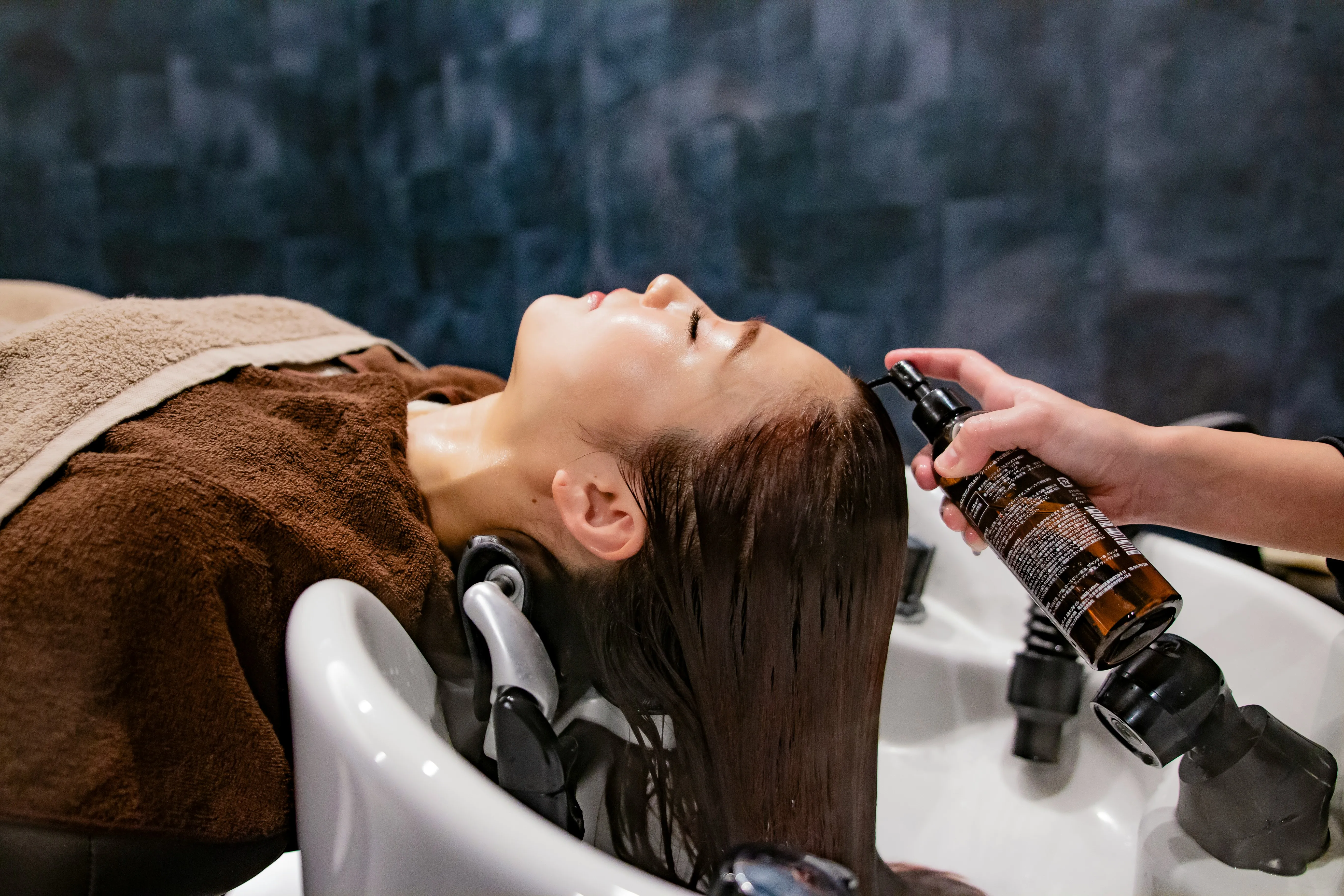
A stylist is halfway through a color treatment when the phone rings. Pick up, and the guest in the chair waits with foils in her hair. Let it ring, and the caller on the other end books with the salon down the street. Every beauty salon and spa owner knows this moment, and most deal with it several times a day.
An ai appointment booking assistant for beauty salons and spas removes that choice. It picks up the call, finds out what the guest wants, books or captures the appointment, and lets your team stay focused on the people already in the room.
AVA is one such assistant. It works as a virtual AI front desk that answers calls, texts, and web chats, books appointments, answers routine questions, and routes complex matters to a real person around the clock. In the beauty space, AVA runs as a dedicated AI voice agent for nail salons, answering calls, scheduling nail appointments, and handling questions about services.
This guide sticks to what AVA is documented to do for phone booking and connected systems. It does not cover pricing, language support, or compatibility with specific salon platforms, because those details depend on your setup and should be confirmed directly with the AVA team.
In plain terms, an AI booking assistant is a front desk voice workflow that you configure once. It handles the routine conversations that come in every day and passes anything unusual to your staff. It does not replace human judgment. It takes the repetitive part of the phone off your team's plate.
For nail salons, AVA answers calls, helps guests book appointments, and responds to questions about services and hours. The same pattern shows up across the industries AVA serves, from clinics to home services. Salons and spas are a natural fit because so much of their phone traffic is predictable: "Do you have anything Saturday?" "How long does a gel fill take?" "Can I move my appointment?"
Industry research points the same way. One analysis of salon and spa phone traffic found that 37% of calls go unanswered, mostly during business hours when staff are busy with treatments [1]. AI agents in this space are designed to handle routine questions about services, pricing, and availability so the team can stay focused on clients in the salon [2]. That is exactly what AVA's nail salon AI receptionist is built to do, and the same call patterns show up in hair salons, spas, and other beauty businesses.
Here is how a few typical calls might play out. These are illustrative examples, not measured results.
Busy Saturdays are when the phone and the chairs compete hardest. Guests are not patient on hold either: one industry report found that 52% of spa callers hang up after three minutes of waiting [3]. AVA is built to take calls during those rush periods so your staff can stay with the clients in front of them. On its nail salon page, AVA states it can handle multiple calls at the same time and claims 4x faster call handling. Treat that as a company claim, not a guarantee for every salon.
After-hours coverage matters more than many owners expect, since a large share of people call for appointments outside normal business hours [4]. After closing, AVA can capture appointment requests and client details so nothing slips through overnight. Depending on how your booking system is connected, some requests can be booked directly, while others are saved for your team to confirm the next morning. Either way, the guest gets an answer instead of voicemail.
Every booking call follows roughly the same path. Not every call ends in a confirmed appointment, and that is by design. Some calls should end with a captured request or a handoff to staff.
For nail appointments, AVA captures the service type, the guest's preferred time, and client details. Those three pieces cover most of what a front desk needs to book a slot or call someone back.
AVA can also be customized to understand your services and pricing, answer questions specific to your business, and book the right appointment type with the right staff member. If you want a guest asking for balayage routed only to your color specialists, that logic is part of a custom AVA workflow setup.
AVA's scheduler honors appointment types, buffers, business hours, and holidays automatically. That matters for salons and spas, where a 90-minute massage and a 20-minute brow wax cannot be treated the same way, and cleanup time between guests is real.
The conversation itself is patient. When a caller pauses to check their calendar, AVA waits rather than rushing to fill the silence. If the pause gets long, it can gently suggest the next available time instead. You can read more about this in our breakdown of how voice agents work.
Rescheduling and cancellations eat up a surprising share of salon phone time. For nail salons, AVA books appointments, confirms available slots, and handles rescheduling requests around the clock, a point covered in our guide to AI voice agent ROI. Guests can reschedule or cancel by phone, and AVA updates the request so your team can manage availability.
Routine changes stay automated. Complex calls, such as a guest unhappy with a past service or a question only the owner can answer, are routed to a real person. You decide where that line sits when you set up the workflow.
If you are comparing options, this table keeps to what AVA is documented to do. Where the available information does not establish a setup detail, the cell shows a dash.
The integration rows deserve a closer look. AVA can also sync with Google and Outlook calendars, booking software, CRM or lead management systems, and help desk tools. After a call, it can create or update the guest's contact record and log what happened. Our guide on CRM call syncing walks through what gets recorded once the workflow is connected.
One thing to keep in mind: your business still defines availability, appointment types, and booking rules inside the system you choose. Dedicated beauty and wellness booking platforms often handle deposits, no-show protection, and memberships better than generic calendars [5]. If you already run on one, confirm AVA compatibility with your specific platform before you commit.
The salons that get the most from an AI assistant are the ones that do a little homework first. AVA deployments can be customized to match the call flows, customer expectations, and booking needs of a specific industry, as the team behind AVA explains. That customization works best when you hand it clear rules.
Use this checklist before you go live:
Start with the calls that are repetitive and easy to get right. For most salons and spas, that means service questions, hours, new appointment requests, rescheduling, and cancellations. Once those run smoothly, you can expand the workflow to cover more.
This is practical rollout advice, not an AVA product requirement. It simply lowers the risk of a confused guest while your team builds trust in the system. If you run more than one location, our article on multi-location AI agents covers how to keep rules consistent across sites.
Your connected booking system is where availability, appointment types, and booking rules live, and you are the one who defines them. A spa might block back-to-back deep tissue sessions for the same therapist. A salon might require a consultation before any color correction. Write those rules down before setup so the assistant books only what your team can actually deliver.
Handoff rules matter just as much. Decide who receives complaints, VIP guests, and anything involving a refund. Since implementation details vary by business, contact the AVA team to confirm what your specific deployment will look like.
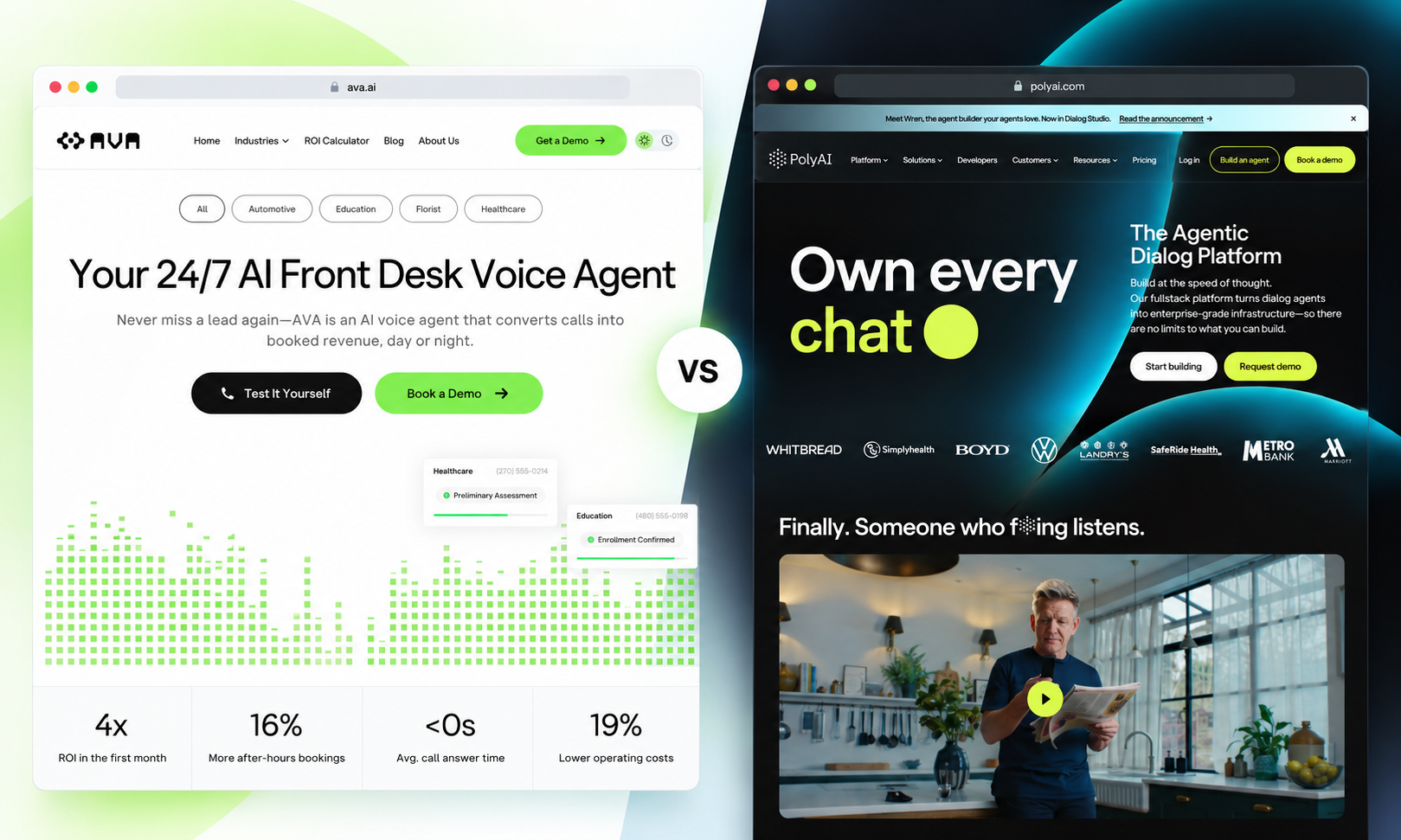
Implementation means preparing your services, appointment types, availability rules, staff routing rules, and connected systems, then testing the call flows. There is no universal timeline, because it depends on how many services you offer and which tools you connect. Med spas that offer clinical treatments may also want to review how AVA handles healthcare front desk calls, or how it compares in our AVA vs Hyro breakdown.
AVA pricing for a beauty salon or spa deployment is not published in the information covered here. Cost usually depends on call volume and how much of the workflow you automate, so the best step is to ask the AVA team for a quote based on your salon. Before that conversation, it helps to estimate your ROI using your own call volume and average appointment value.
Choosing an AI booking assistant comes down to four questions:
AVA handles the routine side of that list. It answers calls and common questions, captures booking details, supports reschedules and cancellations, connects with scheduling and CRM tools, and routes complex matters to your staff. That lets your team give full attention to the guest in the chair. Owners running a lean team can also see how this works for small business owners in general.
If you want to see how this would work for your salon or spa, contact the AVA team about your services and call patterns, or start by exploring the AVA AI front desk.
See exactly how our AI Voice Agent can be customized for your business. Book a free, no-obligation walkthrough today.